One Key Module Developer Program Recap

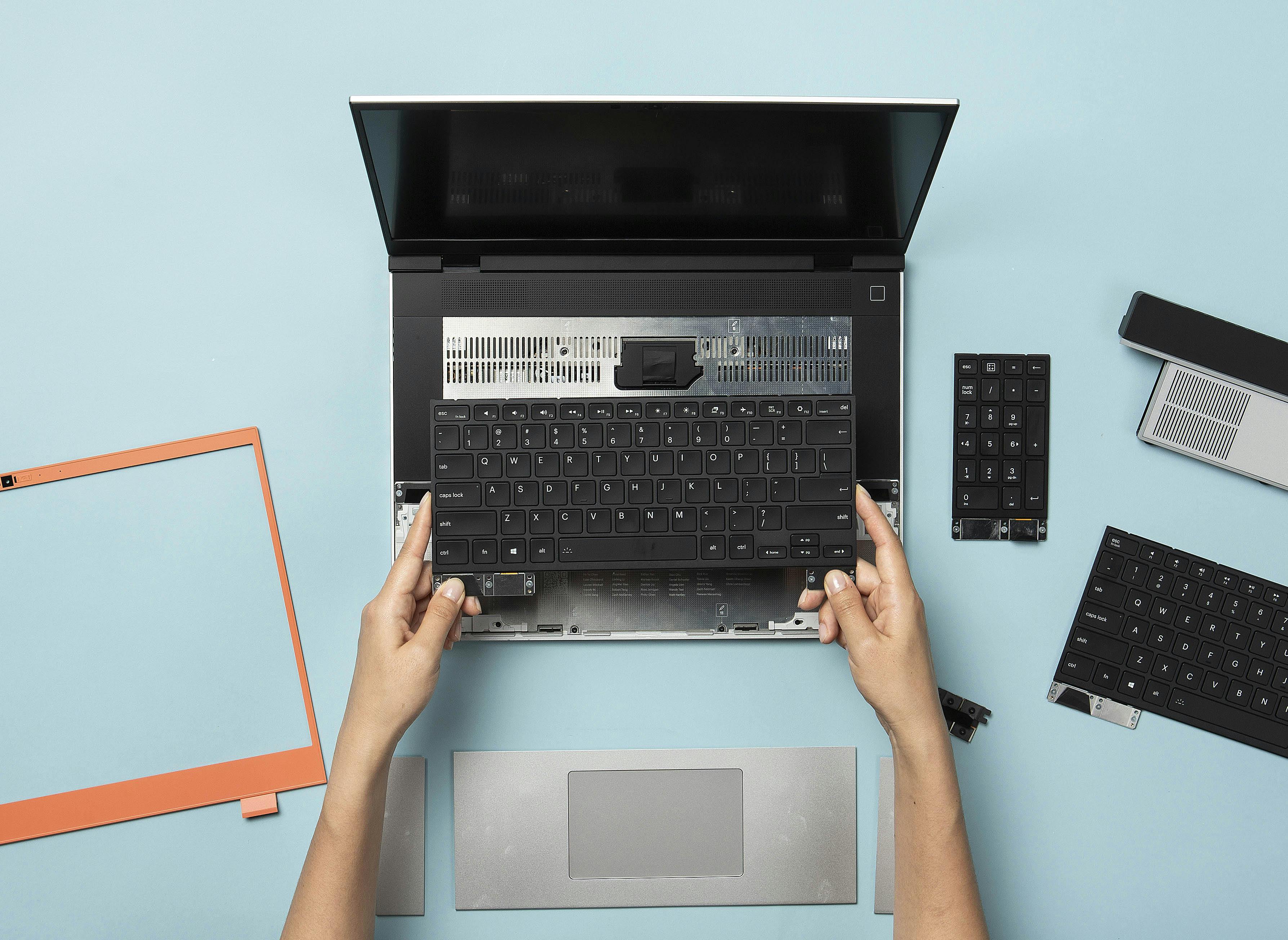
Last year, we announced the One Key Module to enable development of custom ultra-low-profile keyboards and Input Modules for Framework Laptop 16. After around three years of design and prototyping along with an extensive Developer Program that we launched earlier this year, we’ve come to the conclusion that unfortunately we won’t be able to turn this into a sellable product. As a general rule, we avoid announcing products before we have full confidence we can ship them. We made an exception in this case to bring in developer feedback during the design process to ensure we were heading in the right direction. What we learned from both our efforts with our supplier and from feedback from developers was extremely valuable and led to our conclusion to halt the product.
First, despite heroic efforts from our engineering and supply chain team members along with their counterparts at our partner Lite-On, we weren’t able to bring material and assembly costs along with manufacturing yield to a place where the product economics worked. The per-key costs resulted in breakeven pricing too high to reasonably enable high volume sales, and neither we nor our suppliers can take on the overhead of manufacturing a product of this complexity at low volumes.
Second, we found that even the expert DIYers and electronics tinkerers who made up our Developer Program cohort had difficulty reliably assembling the One Key Module into their designs. Parts of the module were too fragile for easy handling, further reducing usable yield. There are design tweaks we could make to drive small improvements, but the changes that would truly improve design for assembly would require exceeding the dimensions that fit the constraints of Framework Laptop 16.
We want to thank the developers who participated in the One Key Module Developer Program for both the hard work they put in and for the valuable feedback they provided. There are a number of incredible projects that came of this, and we’ve highlighted each of them below. We had some development modules left, and we’ve been providing these free to the participants in the program to enable them to build additional quantities of their projects if they choose to.
We design our products to be as open as possible to tinkering and extension, and we will continue to enable developers everywhere we can. You can find design files and documentation on our GitHub. If you have a project you’re interested in developing in the Framework ecosystem, check out our Developer Program sign-up form. The next initiative we have coming up is for the Wireless Keyboard Control Board that is part of the Framework Wireless Touchpad Keyboard. Since this is a core module of the product, and one designed from the start for mass production, we avoid the risks that came in for the One Key Module. We’re looking forward to developer feedback, and can’t wait to see the projects that all of you come up with!


HandyWork by Axel Voitier
Handywork is a split ergo keyboard that uses the entire Framework Laptop 16 input deck width. Axel included a lot of resources such as a template PCB to make your own as well as base footprints for both One Key Module and boards fitting the Framework Laptop 16 for A1 form-factors. You can find their progress in our Community Forum as well as their GitHub.
___________________________________________________________________________________________________________________

VBox by Carlo Vaccari
An ergonomic digital-input leverless controller for fighting games, primarily Super Smash Bros. Melee. The VBox is intended to be highly modular and configurable to fit different button layout preferences and hand sizes. You can find more information on their GitHub.
_________________________________________________________________________________________________________________


Figleaf Keyboard by Sebastian Graz
Sebastian created Bayleaf, a wireless split ergonomic keyboard built from scratch. Like its predecessor Bayleaf, Figleaf is similarly a wireless, split, low-profile, CNC machined, 60% ortholinear keyboard, but it is built around One Key Module. You can follow their progress on their website.
___________________________________________________________________________________________________________________

mikefour by Mike Hölscher
Mike has been building ultra low profile keyboards for the past 2 years including the mikecinq or also known as the mikefive keyboard. The mikefive was named for the 5mm height while the mikefour is for our 4mm height. You can follow their progress on their GitHub.
___________________________________________________________________________________________________________________


The Cogito by Paul Staal
The Cogito is a split ergonomic keyboard designed from first principles and actual measurements of a human hand. Rather than improving on the typewriter’s original QWERTY layout, Paul worked through more than fifty 3D-printed prototypes to feature a columnar stagger matched to finger length, a rotated pinky cluster, and a thumb cluster with six keys that support twelve inputs via ZMK hold-tap behaviors. You can follow their work on their website.
___________________________________________________________________________________________________________________

Shobo by Aleksandr Krikun
The Shobo is a wireless ZMK split built to be as thin as possible, based around Framework One Key Modules. Aleksandr explores the concept of bringing usually bulky split keyboards into the world of portability, hence the name "Shobo" - a small, concealable spike, perfect to underline the emphasis on portability. You can follow their progress on their website and GitHub.
___________________________________________________________________________________________________________________


Framework Missing Keys by Matthew Stephenson
Matthew took a frustration point, the case of PgUp, PgDn, Home, End as missing key options, and set out to add them themself utilizing the spacer area of Framework Laptop 16. You can follow their progress on their webpage and on their GitHub.
___________________________________________________________________________________________________________________

Hermes by Enzo Choi
Hermes is an RP2350a based board that uses the entire Framework Laptop 16 input deck width for a split keyboard and center numpad. Minor tweaks to the Lintilla layout were made to fit the available board space. It connects as any other Framework Laptop 16 input module would, but for flashing and limited external use, they’ve included a PCB board edge USB female connector on the top. You can follow their progress on the Community Forum.