Framework Laptop 13 Pro Deep Dive - LPCAMM2
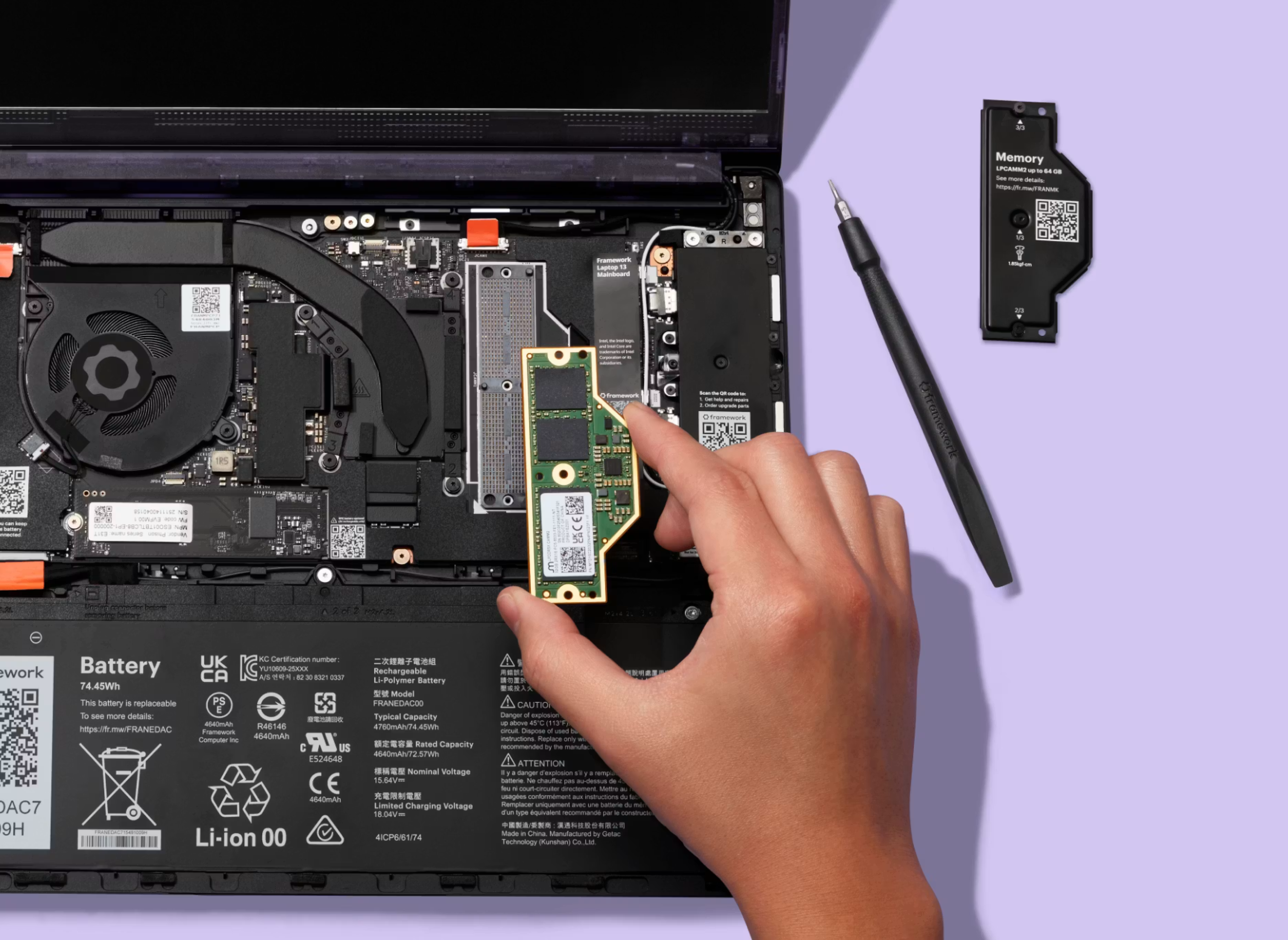
This is the first in a series of deep dive posts that we’ll be sharing around the design and architecture decisions that we made on Framework Laptop 13 Pro. Today, we’ll dig into LPCAMM2, which is the new memory module format we adopted that enables large increases in efficiency and bandwidth through LPDDR5x memory while still maintaining easy upgradeability. This is our third memory platform, since we started with DDR4 with 11th Gen Intel Core and moved to DDR5 with AMD Ryzen 7040 Series.
Framework Laptop 13 Pro is our first laptop with LPDDR5x. All of these memory technologies are standards from JEDEC, an industry organization that’s responsible for a broad range of memory and storage standards. DDR and LPDDR have evolved in parallel over the generations, with the former historically available in PCs and servers while the latter was created for mobile devices like smartphones. The technologies were optimized for the constraints of their form factors. DDR’s electrical interfaces are designed for high scalability of capacity and upgradeability through module formats like the SO-DIMMs used in laptops. LPDDR’s architecture and interface was designed around lower voltage and greater power efficiency, with the limitation of needing to be soldered in close signal proximity to the processor, preventing upgradeability. In the 2010’s, LPDDR started to make its way into laptops, bringing the power efficiency benefits while sacrificing the upgradeability that was previously the norm.
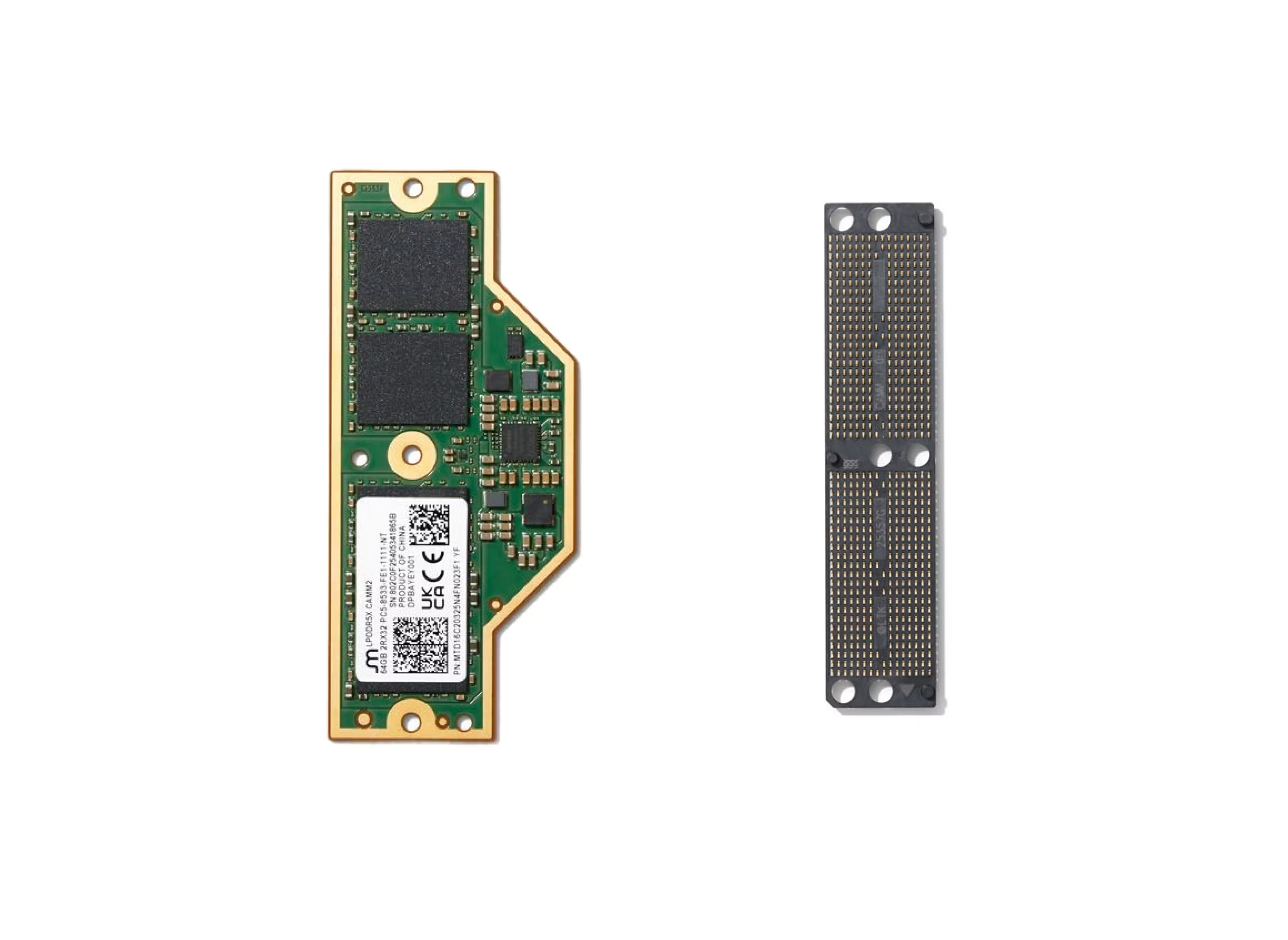
LPCAMM2 was created and standardized specifically to resolve this. It uses the same LPDDR5x memory packages that would otherwise be soldered directly onto a mainboard and moves them onto a separate module that is interfaced through a high density compression interposer. The root of this format was CAMM, which was originally developed by Dell around DDR5. In the standardization process at JEDEC, this evolved into CAMM2 for DDR5 and LPCAMM2 for LPDDR5x. The development and standardization process took years of work by the various participants in JEDEC, with the team at Micron doing a lot of the heavy lifting to get the final LPCAMM2 spec across the finish line. This spec is truly fresh out of the oven. Even during the development process of Framework Laptop 13 Pro, we migrated from an earlier revision of the modules called “E0” to the final “E1” versions that have some differences in the power topology.
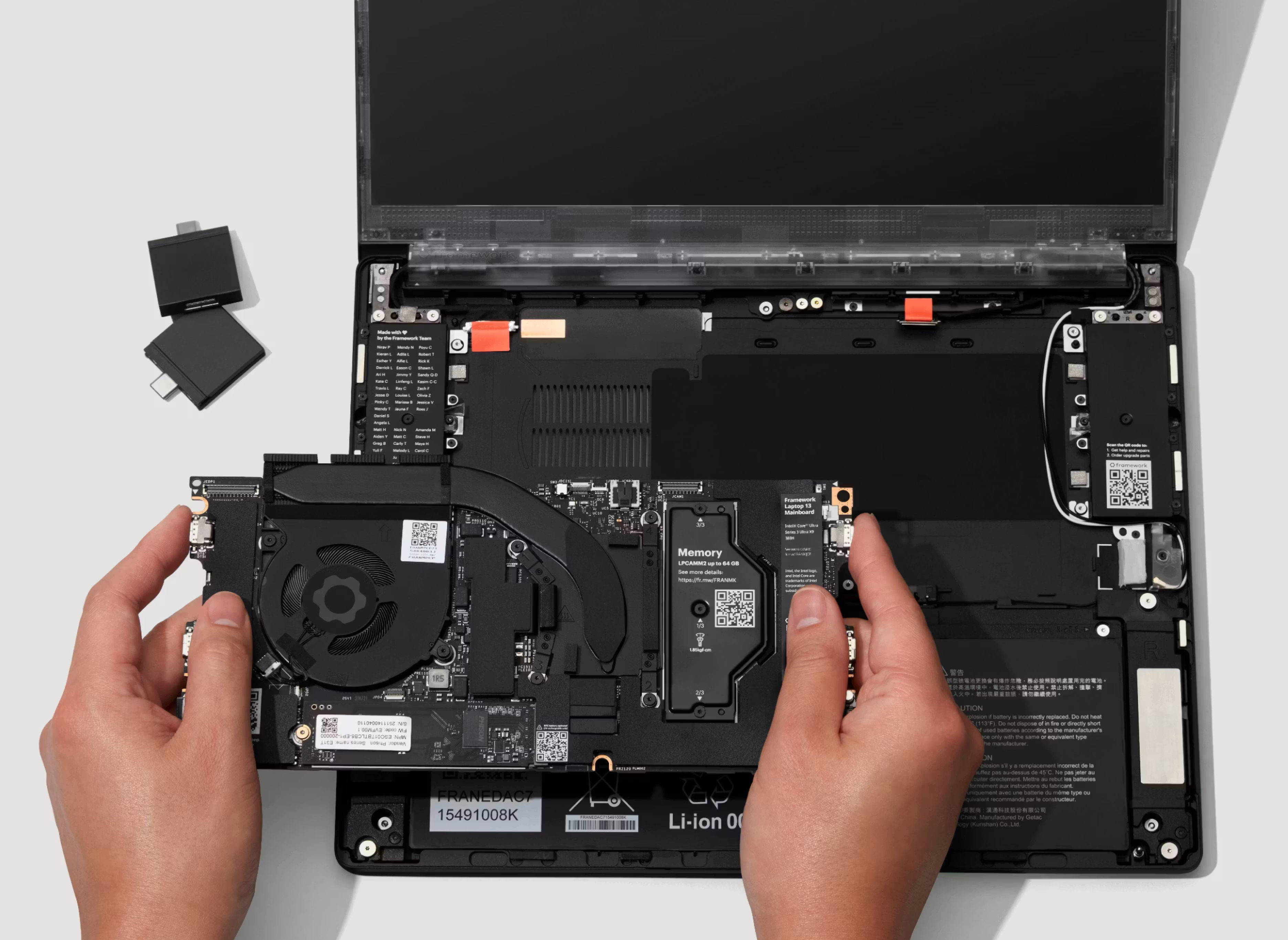
The modules are just one part of the overall solution, since we need to develop the full system around the LPCAMM2 architecture. The core of this is processor selection. Intel’s Core Ultra Series 3 is one of the first processor platforms designed and validated for LPCAMM2. There were a couple of one-off products from brands using LPCAMM2 on earlier CPUs, which were likely bring-up tests ahead of broader deployment this generation. Although the LPCAMM2 modules we’re currently using can run at up to LPDDR5x-8533 speeds, on Intel Core Ultra Series 3, without using a wildly expensive PCB process for the Mainboard, the modules are limited to 7467 MT/s speeds. This is still faster than the maximum DDR5 speeds supported by this platform while delivering lower power consumption, though DDR5 currently supports higher capacities of up to 128GB across two modules.
There are some other interesting advantages of LPCAMM2 beyond the throughput and efficiency improvements. One of the larger challenges with DDR5 SO-DIMMs is RF inference that requires careful antenna placement and shielding to avoid causing issues with Wi-Fi performance. You can see on our DDR5-based Framework Laptop Mainboards that we have EMI absorber mylar parts above and below where the memory modules slot in. With LPCAMM2, the compression pins result in less EMI and there is a built-in provision for a metal plate part that serves as both a heatspreader and an EMI shield. This is part of why you’ll see better Wi-Fi performance on the Framework Laptop 13 Pro with LPCAMM2 than on any of our previous versions.
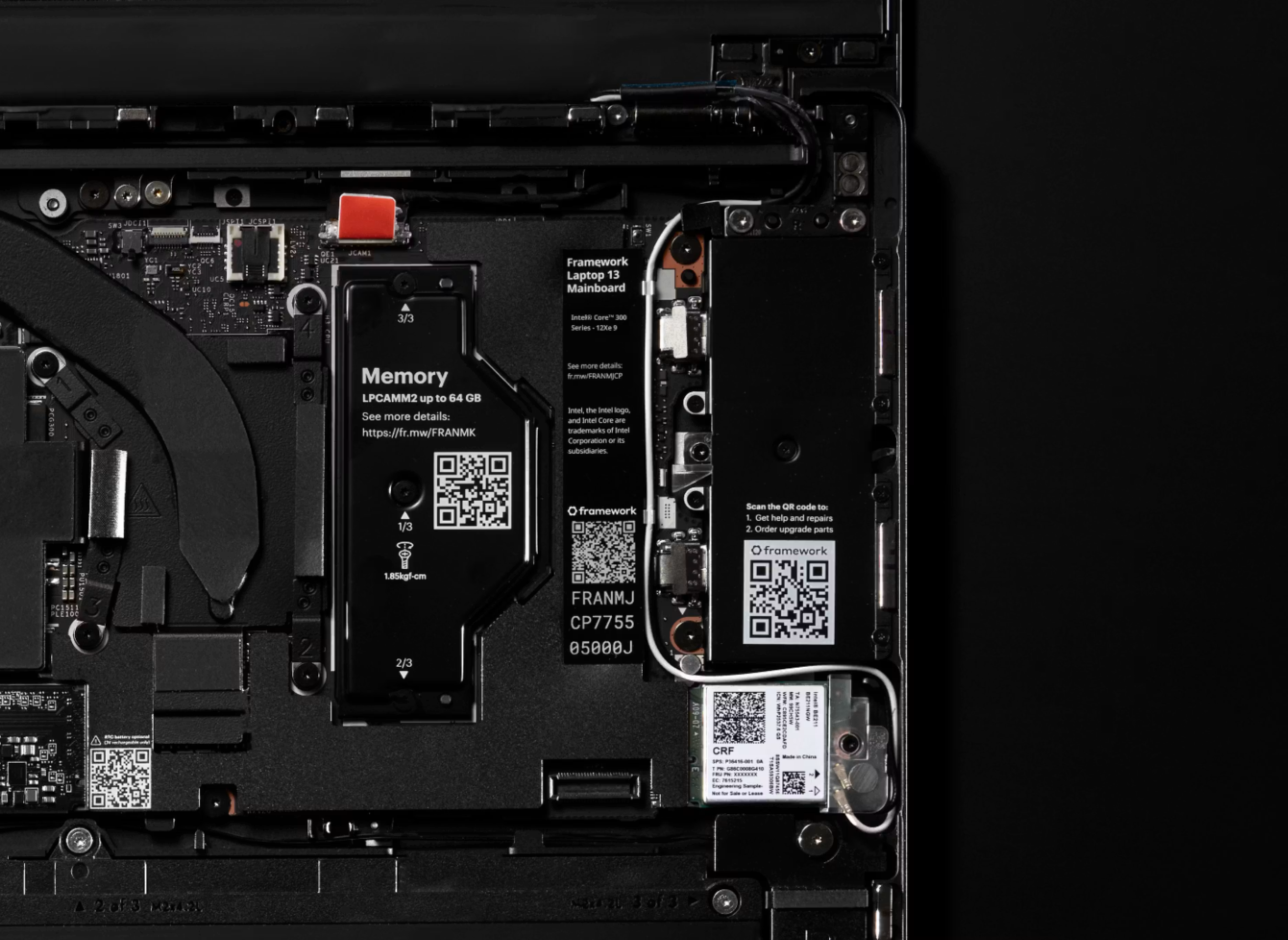
We’re currently offering 16GB, 32GB, and 64GB capacities of LPCAMM2. Intel’s Core Ultra Series 3 platform architecturally supports up to 96GB capacity, though we haven’t yet seen modules of this size. In the current memory environment, upgradeability is a major benefit. You can pick up just the amount of memory you need today in the configurator, knowing that you can always upgrade in the future if your needs change or as memory prices come down from their current highs. As always, in addition to our pre-built configurations which come with memory pre-installed, you can pick up our DIY Edition systems where you can order memory from us or find your own on the open market. Today, there are a limited number of retail LPCAMM2 module options available. As long as the modules follow the JEDEC standard, they should run at 7467 MT/s speeds, but we haven’t validated modules other than the ones we are supplying. We expect LPCAMM2 to continue to increase in popularity and for there to be more retail options in the future. We’re excited to continue to support and enable upgradeability across our products, even as standards evolve and technologies improve.